Daring to be imperfect
"To love oneself is the beginning of a lifelong romance.” — Oscar Wilde

Let’s start with a cliché: you have to love yourself first. It’s true, though. If you’re not taking care of yourself, there’s no way you can show up for others in a meaningful way. Like they always say on airplanes, “put on your own oxygen mask first.” It’s not about being selfish - it’s about filling yourself up so you can give more, love more, and be there more.
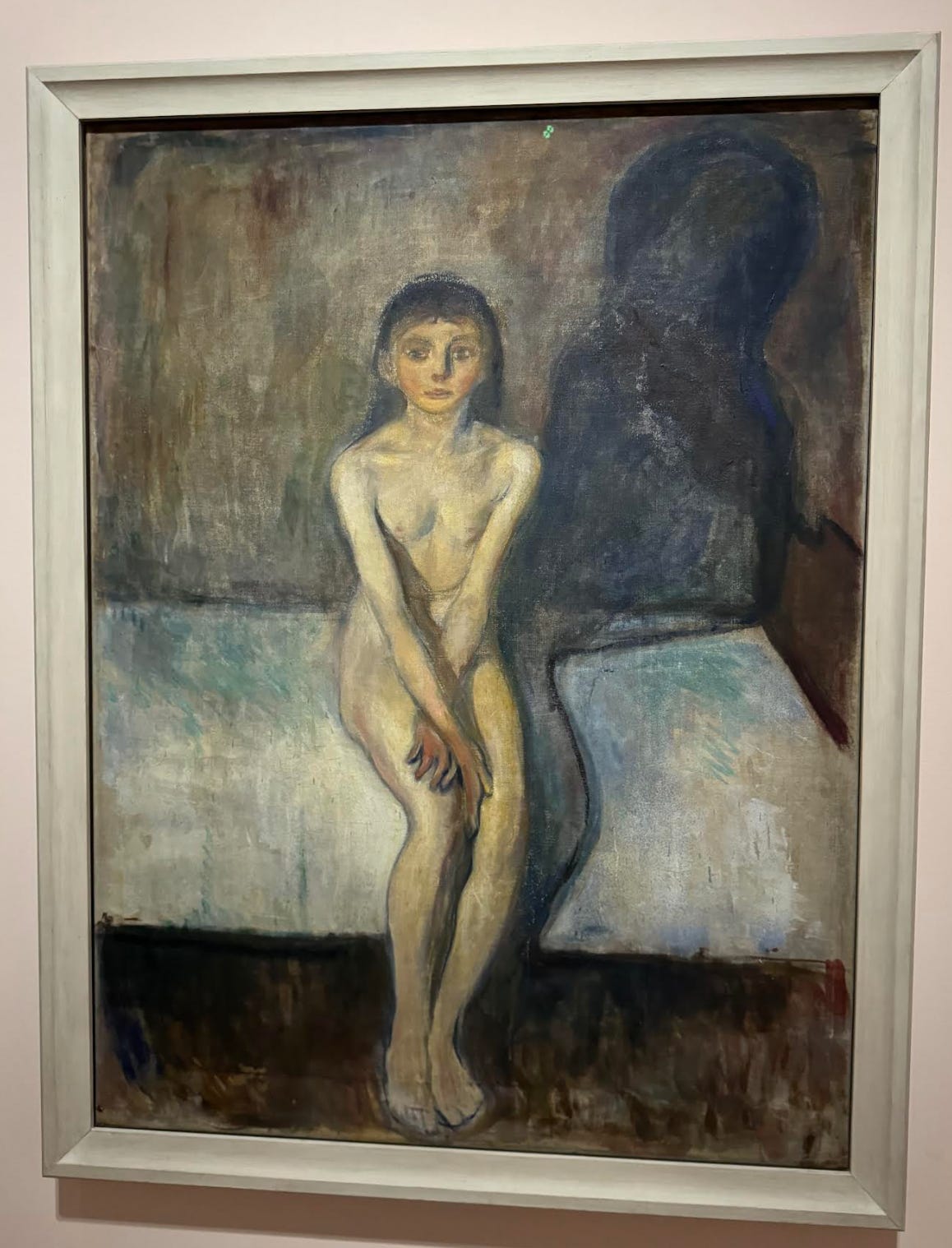
As I think about the art work by Edvard Munch, called Puberty - it feels like looking back at my younger self, sitting there in all her vulnerability. The girl in the painting is exposed, with her insecurities written across her face, and that dark shadow behind her feels like the weight of all those unspoken fears. It reminds me of those adolescent years - feeling beautiful, but so uncertain. When I look at it now, it’s like I want to reach out to her, to my younger self, and say, “It’s okay. It’s safe to feel everything you’re feeling.”
I’ve been listening to "Lost With You" a lot lately, and every time it hits me in a new way. There’s something about the rawness and vulnerability of being “ugly in each other’s arms”- that idea of being completely yourself, flaws and all, and still feeling safe. It’s like the scene with cigarettes scattered around, clothes left behind - “there is a soft, strange kind of odd,” It is about showing your darkness without any fear.
Imperfect, yet beautiful - finding comfort in the mess, in the raw moments, and realizing that you don’t have to be perfect to be loved deeply. Being real with each other, accepting the flaws, the awkwardness- no pretenses, just the two of you, as you are.
If there's just one person in your life with whom you can truly be yourself, then you are incredibly lucky - or someone who feels they can be their true self with you. (Sending my deepest gratitude to my sister.)
In the book, When the Body Says No, Gabor Maté emphasizes that depression is the suppression of the self. It’s like, when we constantly ignore our real emotions - maybe to keep the peace, fit in, or meet expectations - we lose connection with who we actually are. Maté puts it so clearly: “The greatest loss, the one that causes the most suffering, is the loss of self.” It’s heavy, but makes so much sense, right? The more we hide parts of ourselves, the more empty we start to feel.
He also points out how we often try to avoid that emptiness by distracting ourselves - overworking, staying busy, or even numbing ourselves out through things like social media or other habits. But what really helps, he says, is reconnecting with our authentic selves and actually feeling those emotions we’ve been holding back. It’s tough, but it’s where real healing starts. His insights have really stuck with me.
Gabor Maté asks: Which pain would you like? You can have the pain of suppressing yourself, for the sake of being accepted, or you can have the pain, sometimes, of being yourself and not being accepted.
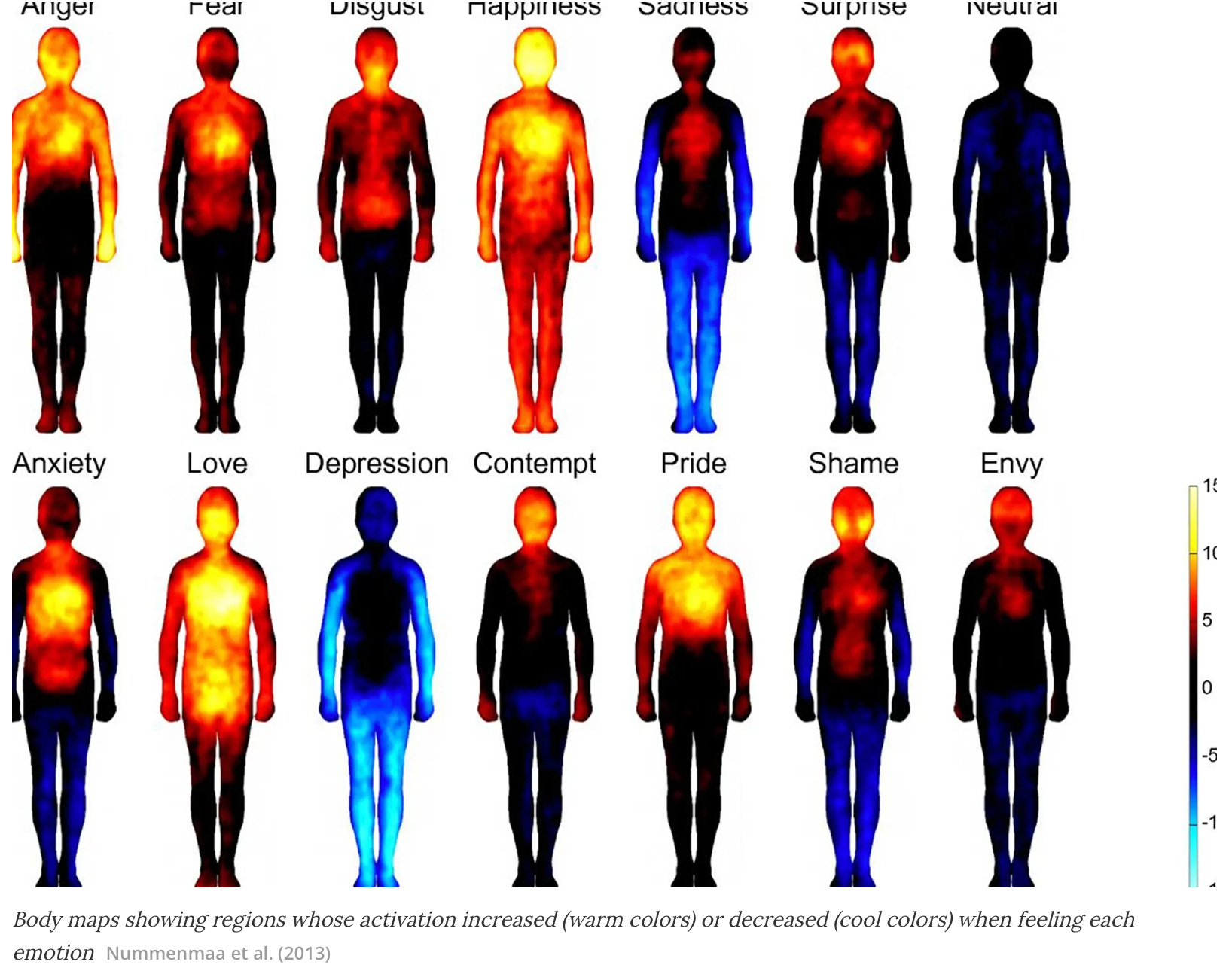
This can be an interesting exercise, Where do you feel your emotions? Have you noticed it before?
My experience
I used to feel that every time someone close to me was upset, angry or dealing with something, it was my job to fix it or make them feel better. But I’ve learned that’s not what real connection is about. It’s about just being there with them, letting them feel what they need to feel without trying to change anything. As an empath, it’s always been hard to not take on their emotions as my own, but honestly, I’m making progress.
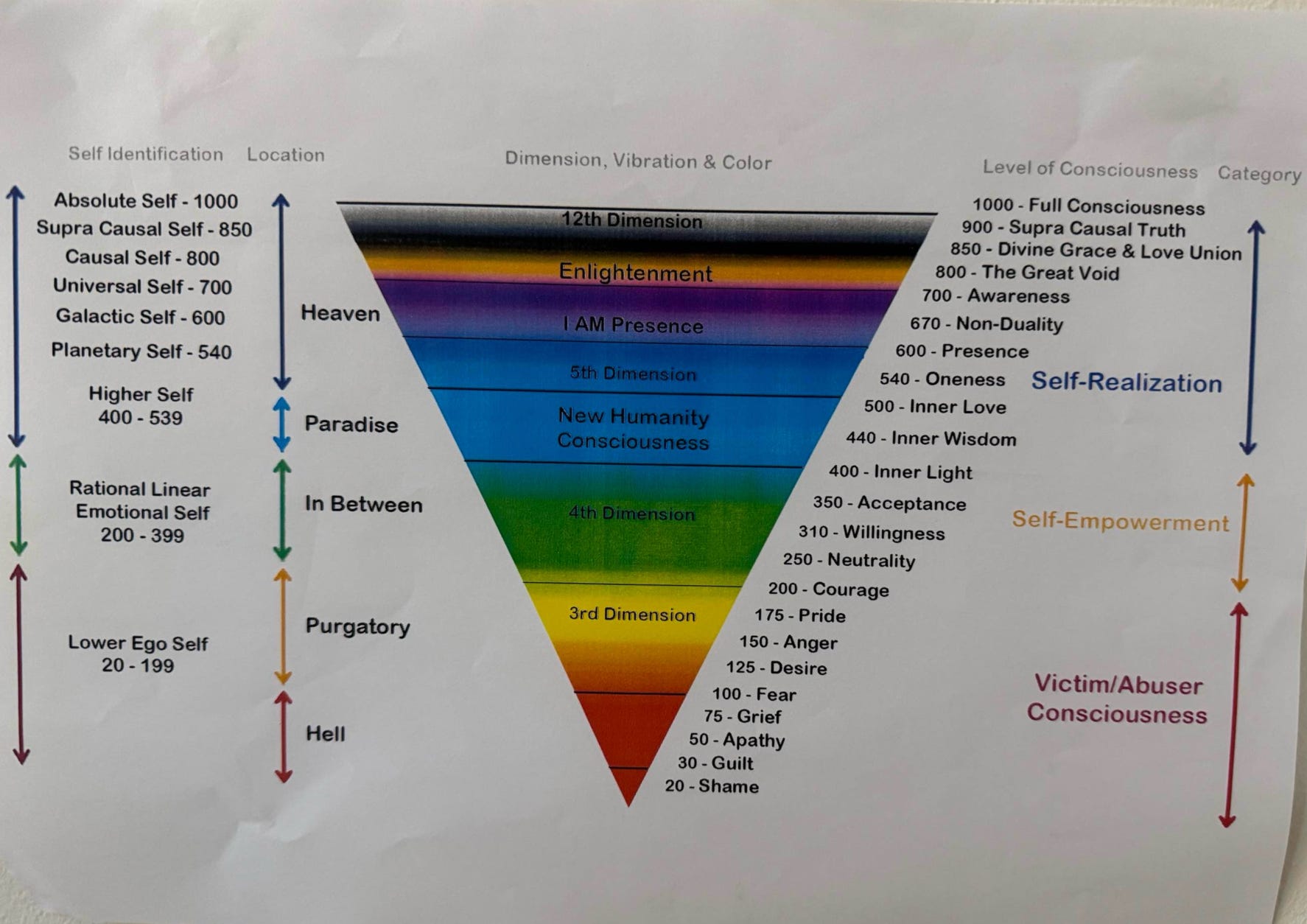
Oh, and speaking of growth, I’ve got this lifetime goal: reaching a higher frequency-500 or above. Reading David Hawkins' Map of Consciousness and how people who reach these higher levels of consciousness have such a massive positive influence. If you hit a frequency of 500 (which is love), you can positively affect 750,000 people, and at 700, you can help counterbalance the negativity of over 70 million people. I love the idea that by working on ourselves, we can actually help raise the vibration of everyone around us.
EXERCISE : Writing a letter to yourself from someone you love - exactly what you need to hear.
Hey You, (me)
You’ve been on the emotional rollercoaster, and it’s adding so much richness to your story. You’re writing your own story, and it’s definitely not boring at all. I’m so proud of you. Don’t be afraid to cry; it’s cleansing your soul. Do not fear people - even the difficult ones teach you to set your boundaries. Disappointment is good because you keep trying (it takes real courage), and fail better each time and you’re building yourself up.
I will always love you and have your back, no matter what.
With all my love,
LET ME ASK YOU
What would you do now to make your inner child happy?
If you could do anything right now to make your inner child smile, what would it be? Where is my drum?!!When did you feel completely yourself with someone? Maybe a bit silly or goofy… or even vulnerable. ❤️
What was your source of approval as a child? How did you get your "Well done?"
Think back to when you were a kid—what made you feel proud or got you that "Well done!?’ Was it acing a test, being exceptionally well-behaved, maybe winning a game? It’s interesting to reflect on how we sought validation back then and how that shapes us now. Gosh!If you didn't care about what others think, would you change anything in your life just for yourself?
Imagine if you could live your life without any judgment from others—would you do anything differently? It’s kind of freeing to think about :)In the book, Daring Greatly, Brené Brown emphasizes that while everyone cares about what others think, we have the power to choose whose opinions we allow to affect us.
Last, but not least; I wanna thank me! Let’s flip it: First things first, I wanna thank me for being me! 😄
And of course, thank you! Thank you for being you and for being exactly who you are.
References
Maté, G. (Year). When the Body Says No: Exploring the Connection Between Emotional Suppression and Mental Health. Psychology Today.
Munch, E. (Year). Puberty: Themes of Vulnerability and Identity. The Art Story.
Hawkins, D. R. (Year). Power vs. Force: Understanding the Map of Consciousness. MindValley.
Verywell Mind. (Year). The Significance of Emotional Intelligence in Understanding and Managing Emotions.
Brown, B. (Year). Embracing Vulnerability: The Key to Connection. TED Talks.
Greater Good Science Center. (Year). The Importance of Self-Compassion for Emotional Well-Being.
The Human Beauty Movement. (Year). Inner Child Healing: Its Significance in Personal Growth.
Psychology Today. (Year). The Benefits of Emotional Expression for Mental Health.
Mindful. (Year). Mindfulness and Emotional Awareness: Recognizing and Processing Emotions.
Brown, B. (2012). Daring Greatly: How the Courage to Be Vulnerable Transforms the Way We Live, Love, Parent, and Lead. Gotham Books.
SELF. (Year). 7 Simple Tips to Be Kinder to Yourself, According to Therapists.
Self-Compassion Scale (SCS) by Kristin Neff: This is a well-validated tool widely used in psychological research. It measures self-compassion across dimensions like self-kindness and mindfulness. For more details, you can refer to the scale and its applications at Self-Compassion.org
Absolutely brilliant! A beautifully written piece that makes you stop and reflect, drawing you inward and leaving a warm smile on your face. Many thanks!